Friday, October 9, 2020

Tuesday, September 29, 2020
Saturday, September 12, 2020
Last Days
Dear Brothers and Sisters in Christ,
The West is burning, the pandemic continues, the economy prepares for another crash, civil unrest prevails, sharp political division easily makes one nervous for November, the perpetual changes and chances of today's home life is often stressful, and most of us are feeling a little more (or a lot more) anxious than usual. What is happening on the larger scale, especially when we see the errie spectacle of a red sun over our heads?! The word "apocalypse" is thrown around, and believe me, the rapturists are having a heyday right now: saber-rattling continues between nations, end-time signs are claimed around the middle east, the ice caps are melting, meteors approach the earth, and we are reminded of the increase of wickedness (and of this increase no one can deny).
Are we living in the end times/the last days? Of course we are, but we must keep this in the perspective of God's Holy Word and we must not succumb to the fear that the enemy tries to elicit in us during this time. There is so much more that is going on "behind the scenes," that is glorious and true.
St. Paul wrote to St. Timothy, "But understand this, that in the last days there will come times of difficulty..." (2 Timothy 3:1). The writer of Hebrews says in a straight-forward manner: "Long ago, at many times and in many ways, God spoke to our fathers by the prophets, but in these last days he has spoken to us by his Son..." (Hebrews 1:1-2). The last days have been for millenia, and they are now.
But God, my dear Christians, is unchangeable. Our LORD is the same yesterday, today, and forever (Hebrews 13:8). He will never break His promise to hold you so firm that "they [you] will never perish, and no one shall snatch them [you] out of my hand" (John 10:28). In the midst of all the worldly threats, Jesus says to you and me: "Fear not, little flock, for it is your Father's good pleasure to give you the kingdom" (Luke 12:38) and "In the world you will have tribulation. But take heart; I have overcome the world" (John 16:33). He says to you and to me: "He who dwells in the shelter of the Most High will abide in the shadow of the Almighty. I will say to the LORD, 'My refuge and my fortress, my God, in whom I trust.' For he will deliver you from the snare of the fowler and from the deadly pestilence. He will cover you with his pinions, and under his wings you will find refuge; his faithfulness is a shield and buckler. You will not fear the terror of the night, nor the arrow that flies by day, nor the pestilence that stalks in darkness, nor the destruction that wastes at noonday. A thousand may fall at your side, ten thousand at your right hand, but it will not come near you" (Psalm 91:1-7)
Everyday for the baptized into Christ is a day in which the LORD encourages you: "And this is the victory that has overcome the world -- our faith. Who is it that overcomes the world except the one who believes that Jesus is the Son of God?" (1st John 5:4-5) So with a living faith, we heed Christ's Word and hear the Christ who has already conquered death: "The LORD will fight for you, and you have only to be silent" (Exodus 14:14, words spoken to the Israelites and completely applicable to the Church today!) And, "Be still, and know that I am God. I will be exalted in the earth!" (Psalm 46:10)
We keep everything in perspective according to the eyes of faith in Christ, "for we walk by faith and not by sight." (2 Corinthians 5:7)
Right now, don't go along with the crowd: do not permit yourself the myopic view of the nightly news that makes politics everything. The three estates must be maintained for this is true life: the government (yes), but also the family (that the world wants to reduce to rubble), and of course the Church (that which the world wants to ignore). All three God works through. We have nothing to fear. God is in control, and He gives us so much to do that we haven't time to sit around and worry. Live in the holy vocations He has given you to live in especially the most sacred one: your baptized child-of-God life testifying to His love and mercy, and then all of the other ones as well as father or mother, husband or wife, child, brother, sister, cousin, aunt, uncle, niece, nephew, friend (never underestimate the biblical import of this word), neighbor, co-worker, church member, citizen, grandfather, grandmother, grandchild, student, teacher, servant, witness, worshipper, evangelist...indeed, with all of this to do: "Therefore [Jesus tells us], do not be anxious about your life...But seek first the kingdom of God and his righteousness, and all these things will be added to you. Therefore do not be anxious about tomorrow, for tomorrow will be anxious for itself. Sufficient for the day is its own trouble." (Matthew 6:28a, 33-34) And, 1st Peter 5:7: "casting all your anxieties on him, because he cares for you."
Luther taught how we should live as Christians: be fasting, be watching, be working... the fasting may come in many ways, but what we are doing is not drowning in dissipation, but controlling our bodies; the watching is living every day prepared to lift up our heads as Christ comes in glory; and the working is to be about the work the LORD has given you today as a form of worship to God through faith (Romans 12) and as a way of loving and serving your neighbor. Let us fast, let us watch, and let us work...and let us be ready, joyful, prepared, confessing our anxiety, and receiving God's gifts. "And the peace of God, which surpasses all understanding, will guard your hearts and your minds in Christ Jesus." (Philippians 4:7) One more thing: remember we are the Church...we do not go along with the stark individualism of our day, but continue to pray, "OUR Father" and to love one another...we are brothers and sisters in Christ; let us know "Life Together" as Bonhoeffer referred to it, and let us encourage one another and all the more as the day of Christ approaches (Hebrews 10:25). We live as described in Colossians 3:16-17: "Let the word of Christ dwell in you richly, teaching and admonishing one another in all wisdom, singing psalms and hymns and spiritual songs, with thankfulness in your hearts to God. And whatever you do, in word or deed, do everything in the name of the LORD Jesus, giving thanks to God the Father through him." And love each other: "Bear one another's burdens, and so fulfill the law of Christ." (Galatians 6:2)
Jesus loves you. He will not let you go! He has made you an heir of God's Kingdom, He has baked you into Himself in Holy Baptism, He has granted you the Holy Spirit...God walks with you; His Word is your sword and shield. We have nothing to fear. The last days? Yes, and with God on our side, they are blessed days.
In Your Service and To Christ's Glory,
Pastor Alfonso
--
Rev. Alfonso Espinosa, Ph.D.
Senior Pastor, Saint Paul's Lutheran Church of Irvine (LC-MS)
Vice-Chair, Board for National Mission (LC-MS)
An Author for Concordia Publishing House
cell: 949-379-0883
"...and with his stripes we are healed." -- Isaiah 53:5
' xlink:href='%23b'/%3e%3cuse fill='black' filter='url(%23c)' xlink:href='%23b'/%3e%3cpath fill='white' d='M12.162 7.338c.176.123.338.245.338.674 0 .43-.229.604-.474.725a.73.73 0 01.089.546c-.077.344-.392.611-.672.69.121.194.159.385.015.62-.185.295-.346.407-1.058.407H7.5c-.988 0-1.5-.546-1.5-1V7.665c0-1.23 1.467-2.275 1.467-3.13L7.361 3.47c-.005-.065.008-.224.058-.27.08-.079.301-.2.635-.2.218 0 .363.041.534.123.581.277.732.978.732 1.542 0 .271-.414 1.083-.47 1.364 0 0 .867-.192 1.879-.199 1.061-.006 1.749.19 1.749.842 0 .261-.219.523-.316.666zM3.6 7h.8a.6.6 0 01.6.6v3.8a.6.6 0 01-.6.6h-.8a.6.6 0 01-.6-.6V7.6a.6.6 0 01.6-.6z'/%3e%3c/g%3e%3c/svg%3e)
' xlink:href='%23b'/%3e%3cuse fill='black' filter='url(%23c)' xlink:href='%23b'/%3e%3cpath fill='white' d='M10.473 4C8.275 4 8 5.824 8 5.824S7.726 4 5.528 4c-2.114 0-2.73 2.222-2.472 3.41C3.736 10.55 8 12.75 8 12.75s4.265-2.2 4.945-5.34c.257-1.188-.36-3.41-2.472-3.41'/%3e%3c/g%3e%3c/svg%3e)
' id='d'%3e %3cstop stop-color='%23FFE874' offset='0%25'/%3e %3cstop stop-color='%23FFE368' stop-opacity='0' offset='100%25'/%3e %3c/radialGradient%3e %3cradialGradient cx='10.82%25' cy='52.019%25' fx='10.82%25' fy='52.019%25' r='10.077%25' gradientTransform='matrix(.91249 .4091 -.31644 .7058 .174 .109)' id='e'%3e %3cstop stop-color='%23F28A2D' stop-opacity='.5' offset='0%25'/%3e %3cstop stop-color='%23F28A2D' stop-opacity='0' offset='100%25'/%3e %3c/radialGradient%3e %3cradialGradient cx='74.131%25' cy='76.545%25' fx='74.131%25' fy='76.545%25' r='28.284%25' gradientTransform='rotate(-38.243 1.4 .537) scale(1 .40312)' id='f'%3e %3cstop stop-color='%23F28A2D' stop-opacity='.5' offset='0%25'/%3e %3cstop stop-color='%23F28A2D' stop-opacity='0' offset='100%25'/%3e %3c/radialGradient%3e %3cradialGradient cx='31.849%25' cy='12.675%25' fx='31.849%25' fy='12.675%25' r='10.743%25' gradientTransform='matrix(.98371 -.17976 .03575 .19562 0 .16)' id='g'%3e %3cstop stop-color='%23D45F00' stop-opacity='.25' offset='0%25'/%3e %3cstop stop-color='%23D45F00' stop-opacity='0' offset='100%25'/%3e %3c/radialGradient%3e %3cradialGradient cx='68.023%25' cy='12.637%25' fx='68.023%25' fy='12.637%25' r='12.093%25' gradientTransform='rotate(11.848 .192 .076) scale(1 .19886)' id='h'%3e %3cstop stop-color='%23D45F00' stop-opacity='.25' offset='0%25'/%3e %3cstop stop-color='%23D45F00' stop-opacity='0' offset='100%25'/%3e %3c/radialGradient%3e %3cradialGradient cx='50.709%25' cy='66.964%25' fx='50.709%25' fy='66.964%25' r='87.22%25' gradientTransform='matrix(0 -.8825 1 0 -.163 1.117)' id='j'%3e %3cstop stop-color='%233B446B' offset='0%25'/%3e %3cstop stop-color='%23202340' offset='68.84%25'/%3e %3c/radialGradient%3e %3cradialGradient cx='49.239%25' cy='66.964%25' fx='49.239%25' fy='66.964%25' r='87.22%25' gradientTransform='matrix(0 -.8825 1 0 -.177 1.104)' id='k'%3e %3cstop stop-color='%233B446B' offset='0%25'/%3e %3cstop stop-color='%23202340' offset='68.84%25'/%3e %3c/radialGradient%3e %3cradialGradient cx='48.317%25' cy='42.726%25' fx='48.317%25' fy='42.726%25' r='29.766%25' gradientTransform='matrix(-.09519 -.96847 1.71516 -1.15488 -.204 1.389)' id='l'%3e %3cstop stop-color='%23E38200' offset='0%25'/%3e %3cstop stop-color='%23CD6700' offset='100%25'/%3e %3c/radialGradient%3e %3cradialGradient cx='50%25' cy='29.807%25' fx='50%25' fy='29.807%25' r='31.377%25' gradientTransform='matrix(.07236 -.9819 2.22613 1.12405 -.2 .454)' id='m'%3e %3cstop stop-color='%23E38200' offset='0%25'/%3e %3cstop stop-color='%23CD6700' offset='100%25'/%3e %3c/radialGradient%3e %3cradialGradient cx='73.646%25' cy='44.274%25' fx='73.646%25' fy='44.274%25' r='29.002%25' gradientTransform='scale(.92955 1) rotate(20.36 .764 .598)' id='p'%3e %3cstop stop-color='%23FF7091' stop-opacity='.7' offset='0%25'/%3e %3cstop stop-color='%23FE6D8E' stop-opacity='0' offset='100%25'/%3e %3c/radialGradient%3e %3cradialGradient cx='26.749%25' cy='29.688%25' fx='26.749%25' fy='29.688%25' r='29.002%25' gradientTransform='scale(.92955 1) rotate(20.36 .278 .353)' id='q'%3e %3cstop stop-color='%23FF7091' stop-opacity='.7' offset='0%25'/%3e %3cstop stop-color='%23FE6D8E' stop-opacity='0' offset='100%25'/%3e %3c/radialGradient%3e %3cradialGradient cx='23.798%25' cy='53.35%25' fx='23.798%25' fy='53.35%25' r='24.89%25' gradientTransform='matrix(-.18738 .97947 -1.25372 -.27758 .951 .449)' id='r'%3e %3cstop stop-color='%239C0600' stop-opacity='.999' offset='0%25'/%3e %3cstop stop-color='%239C0600' stop-opacity='.94' offset='26.692%25'/%3e %3cstop stop-color='%239C0600' stop-opacity='0' offset='100%25'/%3e %3c/radialGradient%3e %3cradialGradient cx='97.063%25' cy='54.555%25' fx='97.063%25' fy='54.555%25' r='15.021%25' gradientTransform='matrix(.8002 .50886 -.59365 1.08039 .518 -.538)' id='s'%3e %3cstop stop-color='%23C71C08' stop-opacity='.75' offset='0%25'/%3e %3cstop stop-color='%23C71C08' stop-opacity='.704' offset='53.056%25'/%3e %3cstop stop-color='%23C71C08' stop-opacity='0' offset='100%25'/%3e %3c/radialGradient%3e %3cradialGradient cx='4.056%25' cy='24.23%25' fx='4.056%25' fy='24.23%25' r='13.05%25' gradientTransform='matrix(.8728 -.3441 .41218 1.20997 -.095 -.037)' id='t'%3e %3cstop stop-color='%239C0600' stop-opacity='.5' offset='0%25'/%3e %3cstop stop-color='%239C0600' stop-opacity='.473' offset='31.614%25'/%3e %3cstop stop-color='%239C0600' stop-opacity='0' offset='100%25'/%3e %3c/radialGradient%3e %3cradialGradient cx='74.586%25' cy='77.013%25' fx='74.586%25' fy='77.013%25' r='17.563%25' gradientTransform='matrix(.77041 .55955 -.56333 .89765 .605 -.339)' id='u'%3e %3cstop stop-color='%239C0600' stop-opacity='.999' offset='0%25'/%3e %3cstop stop-color='%239C0600' stop-opacity='.934' offset='45.7%25'/%3e %3cstop stop-color='%239C0600' stop-opacity='.803' offset='59.211%25'/%3e %3cstop stop-color='%239C0600' stop-opacity='0' offset='100%25'/%3e %3c/radialGradient%3e %3cradialGradient cx='50.001%25' cy='50%25' fx='50.001%25' fy='50%25' r='51.087%25' gradientTransform='matrix(-.3809 .91219 -.97139 -.46943 1.176 .279)' id='v'%3e %3cstop stop-color='%23C71C08' stop-opacity='0' offset='0%25'/%3e %3cstop stop-color='%23C71C08' offset='100%25'/%3e %3c/radialGradient%3e %3cradialGradient cx='2.243%25' cy='4.089%25' fx='2.243%25' fy='4.089%25' r='122.873%25' gradientTransform='scale(.78523 1) rotate(36.406 .025 .05)' id='x'%3e %3cstop stop-color='%23EDA83A' offset='0%25'/%3e %3cstop stop-color='%23FFDC5E' offset='100%25'/%3e %3c/radialGradient%3e %3cradialGradient cx='100%25' cy='7.011%25' fx='100%25' fy='7.011%25' r='105.039%25' gradientTransform='scale(-.90713 -1) rotate(-45.799 -.217 2.489)' id='z'%3e %3cstop stop-color='%23F4B248' offset='0%25'/%3e %3cstop stop-color='%23FFDD5F' offset='100%25'/%3e %3c/radialGradient%3e %3clinearGradient x1='50%25' y1='95.035%25' x2='50%25' y2='7.417%25' id='b'%3e %3cstop stop-color='%23F28A2D' offset='0%25'/%3e %3cstop stop-color='%23FDE86F' offset='100%25'/%3e %3c/linearGradient%3e %3clinearGradient x1='49.985%25' y1='-40.061%25' x2='49.985%25' y2='111.909%25' id='i'%3e %3cstop stop-color='%23482314' offset='0%25'/%3e %3cstop stop-color='%239A4111' offset='100%25'/%3e %3c/linearGradient%3e %3clinearGradient x1='52.727%25' y1='31.334%25' x2='28.964%25' y2='102.251%25' id='o'%3e %3cstop stop-color='%23F34462' offset='0%25'/%3e %3cstop stop-color='%23CC0820' offset='100%25'/%3e %3c/linearGradient%3e %3cpath d='M180 90c0 49.71-40.29 90-90 90S0 139.71 0 90 40.29 0 90 0s90 40.29 90 90z' id='a'/%3e %3cpath d='M108.947 95.828c-23.47-7.285-31.71 8.844-31.71 8.844s2.376-17.954-21.095-25.24c-22.57-7.004-36.253 13.757-37.307 26.812-2.264 28.103 22.134 59.996 31.26 70.86a8.062 8.062 0 008.34 2.584c13.697-3.777 51.904-16.242 66.009-40.667 6.54-11.328 7.06-36.188-15.497-43.193z' id='n'/%3e %3cpath d='M180.642 90c0 49.71-40.289 90-90 90-49.71 0-90-40.29-90-90s40.29-90 90-90c49.711 0 90 40.29 90 90z' id='w'/%3e %3c/defs%3e %3cg fill='none' fill-rule='evenodd'%3e %3cg fill-rule='nonzero'%3e %3cg transform='translate(.005 -.004)'%3e %3cuse fill='url(%23b)' xlink:href='%23a'/%3e %3cuse fill='url(%23c)' xlink:href='%23a'/%3e %3cuse fill='url(%23d)' xlink:href='%23a'/%3e %3cuse fill='url(%23e)' xlink:href='%23a'/%3e %3cuse fill='url(%23f)' xlink:href='%23a'/%3e %3cuse fill='url(%23g)' xlink:href='%23a'/%3e %3cuse fill='url(%23h)' xlink:href='%23a'/%3e %3c/g%3e %3cpath d='M109.013 66.234c-1.14-3.051-36.872-3.051-38.011 0-1.322 3.558 6.806 8.396 19.012 8.255 12.192.14 20.306-4.71 18.999-8.255z' fill='url(%23i)' transform='translate(.005 -.004)'/%3e %3cpath d='M68.006 46.125c.014 7.566-4.823 9.788-11.995 10.702-7.102 1.068-11.883-2.068-11.995-10.702-.099-7.256 3.81-16.116 11.995-16.284 8.17.168 11.981 9.028 11.995 16.284z' fill='url(%23j)' transform='translate(.005 -.004)'/%3e %3cpath d='M54.807 35.054c1.18 1.378.97 3.769-.479 5.358-1.448 1.575-3.571 1.744-4.753.366-1.181-1.378-.97-3.77.478-5.344 1.449-1.59 3.572-1.744 4.754-.38z' fill='%234E506A'/%3e %3cpath d='M112.022 46.125c-.014 7.566 4.823 9.788 11.995 10.702 7.102 1.068 11.883-2.068 11.995-10.702.099-7.256-3.81-16.116-11.995-16.284-8.184.168-11.995 9.028-11.995 16.284z' fill='url(%23k)' transform='translate(.005 -.004)'/%3e %3cpath d='M124.078 34.52c.957 1.547.38 3.881-1.293 5.217-1.674 1.336-3.797 1.181-4.753-.366-.957-1.546-.38-3.88 1.293-5.217 1.66-1.336 3.797-1.181 4.753.366z' fill='%234E506A'/%3e %3cpath d='M37.969 23.344c-2.349 1.983-.45 6.047 3.515 4.19 6.328-2.967 19.899-6.623 31.824-5.287 3.164.351 4.19-.113 3.487-4.022-.689-3.853-4.33-6.37-13.387-5.26-14.035 1.716-23.09 8.396-25.44 10.379z' fill='url(%23l)' transform='translate(.005 -.004)'/%3e %3cpath d='M116.592 12.952c-9.056-1.111-12.698 1.42-13.387 5.259-.703 3.91.323 4.373 3.487 4.022 11.925-1.336 25.481 2.32 31.824 5.287 3.965 1.857 5.864-2.207 3.515-4.19-2.348-1.97-11.404-8.649-25.439-10.378z' fill='url(%23m)' transform='translate(.005 -.004)'/%3e %3c/g%3e %3cg fill-rule='nonzero'%3e %3cuse fill='url(%23o)' xlink:href='%23n'/%3e %3cuse fill='url(%23p)' xlink:href='%23n'/%3e %3cuse fill='url(%23q)' xlink:href='%23n'/%3e %3cuse fill='url(%23r)' xlink:href='%23n'/%3e %3cuse fill='url(%23s)' xlink:href='%23n'/%3e %3cuse fill='url(%23t)' xlink:href='%23n'/%3e %3cuse fill='url(%23u)' xlink:href='%23n'/%3e %3cuse fill-opacity='.5' fill='url(%23v)' xlink:href='%23n'/%3e %3c/g%3e %3cg transform='translate(-.637 -.004)'%3e %3cmask id='y' fill='white'%3e %3cuse xlink:href='%23w'/%3e %3c/mask%3e %3cpath d='M15.52 86.231C9.642 80.508-.708 77.892-1.89 91.153c-.927 10.364 3.93 27.694 16.234 37.763C45.282 154.23 74.742 139.667 75.628 122c.699-13.932-15.502-12.327-20.648-12.045-.352.014-.507-.45-.197-.647a48.147 48.147 0 004.725-3.488c4.036-3.403 1.968-9.31-3.67-7.607-.858.253-14.583 4.359-23.288 1.068-9.872-3.726-11.053-7.214-17.03-13.05z' fill='url(%23x)' fill-rule='nonzero' mask='url(%23y)'/%3e %3cpath d='M161.081 88.2c3.502-6.778 9.066-4.401 12.194-3.359 4.61 1.537 7.353 4.4 7.353 11.572 0 17.001-2.812 32.765-17.002 48.6-25.987 28.982-69.935 25.143-73.675 6.862-3.094-15.16 13.066-16.678 18.34-17.381.365-.042.421-.605.098-.746a46.169 46.169 0 01-5.4-2.896c-5.444-3.403-3.989-10.051 2.405-9.07 6.806 1.012 15.23 2.924 22.486 2.207 21.009-2.11 24.975-19.87 33.201-35.789z' fill='url(%23z)' fill-rule='nonzero' mask='url(%23y)'/%3e %3c/g%3e %3c/g%3e %3c/svg%3e)
Wednesday, August 26, 2020
New Book's Landing Page Released! "Faith That Engages the Culture"
Dear Friends,
Concordia Publishing House has released a new landing page for my upcoming second book!
Have a look at:
https://books.cph.org/faith-that-engages-the-culture
The peace of the LORD be with you!
Rev. Alfonso Espinosa, Ph.D.
Monday, August 3, 2020
Chapter 8 of Faith That Sees Through the Culture (CPH, 2018) is my personal favorite chapter in the book and makes my next book Faith That Engages the Culture (CPH, 2021) all the more exciting as it nears release!
Dear Friends in Christ,
Chapter 8 of Faith That Sees Through the Culture is the chapter in the book that doesn't just look at one duality, but two! The first duality is the Gospel that is both inclusive and exclusive (duality #1); and the second duality are the two possible states of whomever we engage with the Gospel: a person either considers the Gospel as unnecessary-irrelavent or thirsts for the Gospel to save them from their weakness and inability (duality #2). But as they say, first things first: we must understand that inclusivity and exclusivity are neither contradictory nor do they cancel each other out.
To establish the complementarity of inclusivity and exclusivity, we must first cross the bridge of what the Christian faith actually is. There are two basic options: 1) it is simply one anthropological subjective tradition that treats the mythological as real (what most people think of when religion is mentioned; and in this case all that matters is that the religion makes one feel good, cope with life better, or maybe even make one a better person). It's all so utilitarian; and 2) the Christian faith is true in that it corresponds with reality; that is while it requires subjective faith to hold to it; the Christian faith (body of teaching; and the gifts of the Sacraments) are objective.
If the Christian faith is the former, then inclusivity and exclusivity are undoubtedly contradictory since subjective preferences easily contradict, but no harm, no foul. "Contradictions" are unimportant when religion comes from sheer subjectivism and imagination. This realm is inherently flexible and responds to the whims of emotional and cultural fluctuation. If this is the case, then Christianity has no right to claim a special status from a universal perspective.
If, however, the Christian faith is the latter, then inclusivity and exclusivity are not only not contradictory, but they are necessary for the compelling truth of the Gospel of Jesus Christ.
It is here that I offered perhaps the most important Christian apologetic in the book Faith That Sees Through the Culture. The fact is that we find many things in the realm of empirical experience that are both inclusive and exclusive at the same time.
The first example is from the realm of science (actually in the book I offer two examples), but for this blog lets stick to H2O. Water is universality available (at least in most cases throughout the world), but it is also absolutely exclusive in terms of its necessity for human life. We would find it ludicrous for someone to say however, "I am deeply offended that you would reduce necessary liquids essential to human life to water! Why not include -- for instance -- motor oil?! If we maintain a wide swath of potential liquids that will sustain life then not only would we be more politically and culturally considerate in our thinking, but no one would ever accuse us of being narrow-minded!"
There are many examples of this complementarity. In the book I also provide examples from relationships (i.e. if you are married, once upon a time when you were single, there were potentially many would-be spouses, but when you married the broad inclusivity of "possible" spouses was narrowed to an exclusive one to whom you now identify as your one and only spouse). The section on cultural artifacts was one of my favorites: food is inclusive (there are so many kinds of food), but Mexican or Chinese food are exclusive within the spectrum.
So, if this is the standard, why not just say that religion is a broad spectrum with lots of choices? The reason is because every "choice" makes truth claims about itself. What makes the Christian faith unique is that it is the only "option" in which God's love for you and all individuals is completely intact and guaranteed before a person does anything!
At the same time, in order for God's universal love and mercy for the forgiveness of sins to be certain and true, then the historical event of Christ's life, death, and resurrection (Christ's exclusive salvific work) provided the empirical and identifable evidence and verification for God's inclusive salvation. The inclusive requires the exclusive. No, these are not contradictory, but indeed complementary.
This leads us to the second duality in chapter 8: folks who either have no care or use for the saving Gospel of Christ; and folks who are hungry and thirsty for the salvation the Gospel freely gives. How do we know where a person is at? Here, it is vitally important that we avoid labels or make presumptions. A pastor or a very "religious person" may in actuality be in the first category: not feeling a need for the Gospel, but relying upon their own attempts at holy living, trying to convince themselves that they can earn or merit salvation. We can never make assumptions about people, nor should we try to pin-point and pigeonhole.
Instead, we engage in genuinely caring and loving engagment (and this is what the entire second book that is coming soon -- Faith That Engages the Culture -- is all about). Engagement seeks to hear what the one we engage with simply shares about themselves. The Christian offers no judgment; nor does she or he pretend to be able to read minds and look into people's hearts. No! At the same time, the Christian is entirely certain that God loves deeply the person they are engaging with.
So, we invest in relationships for people to share with us where they are at. If we find out that they consider themselves self-sufficient even to the point of facing death, then that dear person needs to hear the LAW of God. They need God's righteous standard to be put alongside their imagined security; they need to discover that their confidence is misplaced and that at the end of the day, a serious problem exists.
The Law's application, however, is neither obnoxious nor is it the occasion for the Christian to pontificate or stroke their own piety, not at all. Instead, the Law is a loving and gentle observation that God's standards for right and wrong are beyond human ability to perform. More important, however, is the reason for this: we are at the core, in our hearts, sinful and unclean. People are not sinners because they commit sins, but rather, people who commit sins are at the core sinful. Without a doubt, this condition is also inclusive!
The Christian does not need to "get into the boat" with the one they engage with, since Christians are also sinners, they should realize they are already in the same boat as with the one they engage! This one fact should inspire geunine humility. All the Christian does is demonstrate the Law's chief purpose: to expose, reveal, and convict one of sin. Not only is this not a bad thing, but it is a loving thing so that people finally see their real need for the Savior Christ!
But -- and on the other hand -- when a person is in despair, when they sense their need, and know their guilt and shame; when they know there is nothing they can do to give hope to themselves in the face of death, then the Christian shares nothing but the Gospel! For such folks, the Law has already visited them; they already know their need, there is no need to go there. Instead, the Christian should go straight to the Gospel: "God sent His Son to bear your guilt, your sin, your curse, your dread, your shame...and indeed, your death! Jesus conducted the happy exchange: He took your unrighteousness and put upon you His righteousness. What an exchange indeed! The unrighteous ones become righteous, and the ONLY RIGHTEOUS ONE willingly took upon Himself the sins of all the unrighteous ones! And why? Out of God's great love for all people!"
My forthcoming book Faith That Engages the Culture will present engagment in a very simple way; and I'd like to think in a very exciting way. After the first six chapters present the biblical "system" -- if you will -- on how to engage; the second six chapters then apply engagment to some of the more challenging issues of our day: cultural issues around us in the face of Christianity like science, politics, and dehumanization; as well as cultural issues within us which also challenge Christian engagement like sexuality, addiction, and depression. At every turn, the Word of Christ equips us to love people, all people, taking into consideration their unique cultural environment, and then standing back to see how the Holy Spirit works through granting others the realization that God is on their side all on account of Jesus Christ!
In Your Service and To Christ's Glory,
Rev. Dr. Alfonso Espinosa
Monday, April 6, 2020
Why Faith and Culture Side-By-Side? Because God so love the WORLD that He gave Christ to us!
Dear Christians,
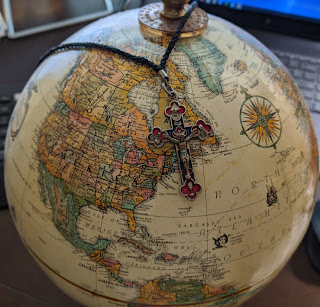
This why this blog exists.
From Classical Apologetics: A Rational Defense of the Christian Faith and a Critique of Presuppostional Apologetics by R.C. Sproul, John Gerstner, and Arthur Lindsley (Grand Rapids, Michigan: Zondervan Publishing House, 1984):
"Taken in its pejorative sense, secularization may mean the capitulation of the church to secularism, the surrender of her redemptive mission to the spirit of this world. In this sense the church would cease to be the church; its identity would be lost, its message but an echo of secularism. The fear of such an amalgamation moves some to embrace the reservation as a place where the pristine purity of the faith may be jealously guarded (while it dies in peace). But the church must be profane if it is to be the church; profane not in the vulgar sense but in the sense in which Luther used it -- that the church must come outside of the temple (pro fanus) and into the world. It is not the profanity of blasphemy but the profanity Christ inaugurated by the Great Commission. The process of secularization in the meliorative sense, began the moment Christ intruded into the Upper Room where the disciples had withdrawn into hiding because of their fear: Pentecost impelled the church into the here and now. The power was from on high but its focus was on the here and now." (pg. 6)
This is why this blog exists.
In Your Service and To His Glory,
Rev. Dr. Alfonso Espinosa

Subscribe to:
Posts (Atom)